
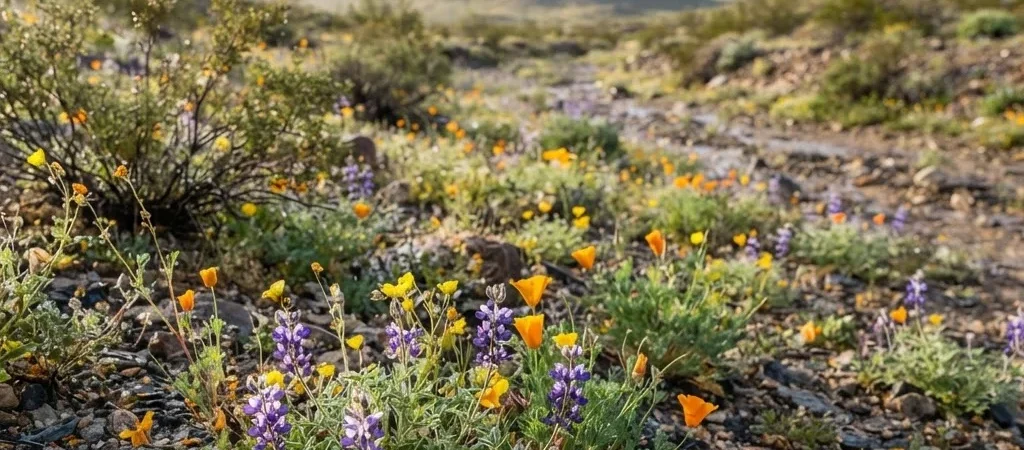
A normally spare stretch of desert can look startlingly different after a favorable season of rain. Small wildflowers appear between rocks and across open ground, drawing attention to plants that were easy to miss when the soil looked bare. The change is remarkable precisely because it is not on demand.
A landscape waiting quietly
Many desert annuals persist as seeds through dry periods, then grow when moisture and temperatures align. Rain matters, but its timing and follow-up conditions matter too; a brief shower does not guarantee a broad bloom. That variability is part of the ecology, not a failure of the landscape to perform.
The Southwest is not one scene
The Sonoran and Mojave deserts hold different habitats, elevations, and plant communities, so a show of flowers in one place does not describe the entire region. Even nearby trails can look different depending on recent weather and local terrain. A specific location’s land manager or visitor information is a better guide than a sweeping promise of peak color.
Go gently when flowers appear
Stay on established paths and avoid stepping into delicate growth for a photograph. Check current access guidance before setting out, since conditions and protections vary by site. The most lasting way to appreciate a desert bloom is to leave the ground undisturbed for whoever comes after.